
Medellín vs Mexico City — Latin America's Best
Medellín and Mexico City are Latin America's two heavyweight nomad destinations. Both have exploded in popularity over the past five years, both offer incredible value for money, and both sit in timezones that align perfectly with US and Canadian working hours. That timezone advantage alone is why so many North American remote workers end up in one of these two cities instead of Southeast Asia or Europe.
But the experience of living in each is radically different. Medellín is a mid-sized city in a valley surrounded by mountains. Mexico City is one of the largest metropolitan areas on Earth. That scale difference shapes everything. Here's the honest breakdown.
Cost of Living: Medellín Wins (Slightly)
Both cities are affordable by North American and European standards. Medellín is cheaper, but the gap has narrowed as the city's popularity has driven up prices in nomad-heavy neighbourhoods like El Poblado and Laureles.
Medellín monthly budget (comfortable):
- Rent (1-bed, furnished): $500-$900
- Coworking: $80-$150
- Food: $250-$400
- Transport: $30-$50 (metro + occasional taxi)
- Total: ~$1,100-$1,700
Mexico City monthly budget (comfortable):
- Rent (1-bed, furnished): $600-$1,200
- Coworking: $100-$200
- Food: $300-$500
- Transport: $20-$50 (metro is incredibly cheap)
- Total: ~$1,200-$2,100
Mexico City has a wider range. You can live very cheaply in Roma or Condesa if you find the right apartment, or you can spend more than you would in a mid-tier US city if you eat out constantly at the high-end restaurants that now fill Polanco and Juárez.
Medellín's pricing is more compressed. El Poblado is the most expensive area and it's still manageable. Laureles and Envigado offer excellent value with better local integration.
In Sour Mango: Check Destinations for current cost breakdowns in both cities. Use Currency Converter to track COP and MXN — both currencies can swing 10-15% in a year, which meaningfully impacts your monthly budget. Price Checker helps you benchmark whether an Airbnb or restaurant is charging local or tourist rates.
Timezone: Tie (Both Win)
This is the single biggest advantage both cities share over Asian and European nomad hubs.
Medellín: UTC-5 (same as US Eastern Standard Time)
Mexico City: UTC-6 (same as US Central Standard Time)
If you work with US clients or a US-based team, either city lets you keep normal working hours. No 2am calls. No missing half the workday waiting for colleagues to wake up. This alone is why many American and Canadian nomads choose Latin America over Southeast Asia, where the timezone gap means either late nights or early mornings.
Safety: Mexico City Edges It (With Caveats)
Safety is the topic every nomad post about Latin America has to address, and the honest answer is nuanced for both cities.
Medellín has transformed dramatically from its cartel-era reputation. The tourist and nomad areas (El Poblado, Laureles, Envigado) are generally safe for foreigners. Petty crime exists — phone snatchings, bag grabs — but violent crime directed at tourists is rare. The main safety concern is scam-related: overcharging, fake taxi meters, and occasional drink-spiking at bars.
Mexico City is enormous, and safety varies hugely by neighbourhood. Roma, Condesa, Polanco, Coyoacán, and Centro Histórico (during the day) are safe and heavily patrolled. Other areas require more awareness. Petty crime is comparable to Medellín. The city's sheer size means you're more anonymous, which some people find safer and others find less so.
Both cities require standard urban awareness — don't flash expensive electronics, use registered taxis or Uber/DiDi, be careful at ATMs, and stay aware at night. Neither city is dangerous for a reasonably cautious person staying in established neighbourhoods.
In Sour Mango: Use Share Location so someone always knows where you are, especially when exploring new neighbourhoods. Mates connections can provide neighbourhood-specific safety advice that's more current than any blog post.
Food: Mexico City Wins Decisively
Mexico City's food scene is one of the best in the world. Not one of the best in Latin America — one of the best on the planet. The city has everything from $0.50 street tacos to Michelin-starred restaurants, and the middle ground is enormous.
Mexico City food highlights:
- Street tacos (al pastor, suadero, campechanos) — $0.50-$1.50 each
- Market food at Mercado de Coyoacán, Mercado Roma, La Merced
- Oaxacan food, Yucatecan food, Pueblan food — every region represented
- World-class fine dining (Pujol, Contramar, Quintonil)
- Late-night food culture that runs until 3-4am
Medellín food highlights:
- Bandeja paisa (the signature dish — beans, rice, chicharrón, egg, avocado, arepa)
- Arepas everywhere, in every variation
- Corrientazo (set lunch) for $2-$4 — huge portions
- Growing international food scene in Poblado and Laureles
- Fresh tropical fruit juices for under $1
Medellín's food is hearty, affordable, and satisfying. But Colombian cuisine has less variety and complexity than Mexican cuisine. Mexico City's food scene operates at a level that few cities anywhere can match.
In Sour Mango: Local Food is essential in both cities but especially Mexico City, where the best tacos and market stalls aren't on Google Maps. The difference between a random taco stand and a legendary one can be a single block.
Internet: Mexico City Wins
Mexico City has solid internet infrastructure. Apartments with Telmex or Totalplay fibre deliver 50-200 Mbps. Coworking spaces run 100-300 Mbps. Cafe WiFi is hit-or-miss but averages 15-40 Mbps in Roma and Condesa.
Medellín's internet is decent but less consistent. Claro, Movistar, and Tigo fibre deliver 30-100 Mbps in most apartments. Coworking spaces run 50-150 Mbps. Cafe WiFi is workable at 10-30 Mbps but outages happen, especially during heavy rain.
Both cities are fine for standard remote work — video calls, Slack, email. If you need consistently high bandwidth, Mexico City is more reliable.
Mobile data: Both are cheap. Mexico data plans with Telcel or AT&T run $10-$20/month for 20-40GB. Colombian data with Claro or Movistar runs $10-$15/month for similar data.
In Sour Mango: Run WiFi Speed Test at every new spot in both cities. In Medellín especially, rain can kill a connection mid-call — having backup spots saved in the app prevents panic.
Community: Mexico City Is Bigger, Medellín Is Tighter
Mexico City's nomad community has grown enormous. Roma Norte and Condesa are packed with remote workers from the US, Canada, and Europe. The scene is diverse — startup founders, freelancers, content creators, corporate remote workers. There's a sub-community for basically every interest and profession.
Medellín's community is smaller but very active. The nomad scene is concentrated in El Poblado and Laureles, which makes it easy to bump into the same people. Weekly meetups, Spanish exchange events, and coworking communities create a genuine sense of belonging.
Mexico City's size means more options but less cohesion. Medellín's compactness means more repeated interactions and faster friendships.
In Sour Mango: Join Tribes in either city to find your professional and social niche. Both cities have active tribes for different interests. Use Mates for one-on-one connections.
Neighbourhoods: Where to Base Yourself
Both cities have clearly defined nomad zones, but they feel very different.
Medellín neighbourhoods for nomads:
- El Poblado — The default foreigner neighbourhood. Walkable, safe, full of restaurants and cafes. Also increasingly touristy and expensive by local standards. Good for your first month.
- Laureles — The upgrade. More local, more affordable, better food value, and a growing coworking scene. Many long-term nomads settle here after trying Poblado.
- Envigado — Adjacent municipality that's technically not Medellín but feels like it. Quieter, very Colombian, excellent bakeries and local food. The best value option.
- Sabaneta — Further south, even cheaper, very local. Good if you want full immersion and don't mind a 30-minute metro commute.
Mexico City neighbourhoods for nomads:
- Roma Norte — The epicentre of CDMX nomad life. Art Deco buildings, tree-lined streets, world-class restaurants, and coffee shops on every block. Can feel like a Brooklyn outpost at times.
- Condesa — Adjacent to Roma with a slightly more residential, park-centric feel. Parque México is the heart. Slightly quieter, slightly pricier.
- Juárez — Up-and-coming, edgier, with great mezcalerías and nightlife. Cheaper than Roma/Condesa but gentrifying fast.
- Coyoacán — The Frida Kahlo neighbourhood. More Mexican, more colourful, further from the nomad bubble. Excellent if you want cultural immersion.
- Polanco — The upscale district. Corporate, polished, expensive. Best restaurants in the city. Not where most nomads live, but worth visiting.
In Sour Mango: Browse both cities in Destinations for neighbourhood-level breakdowns. Use Mates to connect with nomads already in specific neighbourhoods for real-time recommendations.
Coworking Spaces: Both Well-Served
Medellín standouts:
- Selina (Poblado) — The international chain with a social focus. Pool, events, coliving. ~$120/month for hot desk.
- Tinkko (Poblado) — Professional, reliable, good community events. ~$100/month.
- Workshop Coworking (Laureles) — Local favourite with strong WiFi and a quieter vibe. ~$80/month.
Mexico City standouts:
- WeWork (multiple locations) — Professional, reliable, expensive. ~$200/month.
- Selina (Roma) — Social, traveller-focused, good rooftop. ~$150/month.
- Homework (Juárez) — Local chain, affordable, strong community. ~$100/month.
- Centraal (Roma/Condesa) — Excellent mid-range option with good design and events. ~$120/month.
Mexico City has more options due to its sheer size. Medellín's spaces are more concentrated and community-focused. Both cities also have an abundance of work-friendly cafes where you can set up for the price of a coffee.
Transport: Mexico City Wins on Infrastructure
Mexico City has a world-class metro system — 12 lines, covering most of the city, at $0.25 per ride. It's one of the cheapest metro systems on Earth. The Metrobús (BRT) supplements it well. Uber and DiDi are cheap and ubiquitous. The city is bikeable in the central neighbourhoods, with Ecobici bike-sharing at $25/year.
The downside: traffic is horrendous. A 10km Uber ride can take 15 minutes or 90 minutes depending on the time of day. Rush hour in CDMX is a special kind of purgatory.
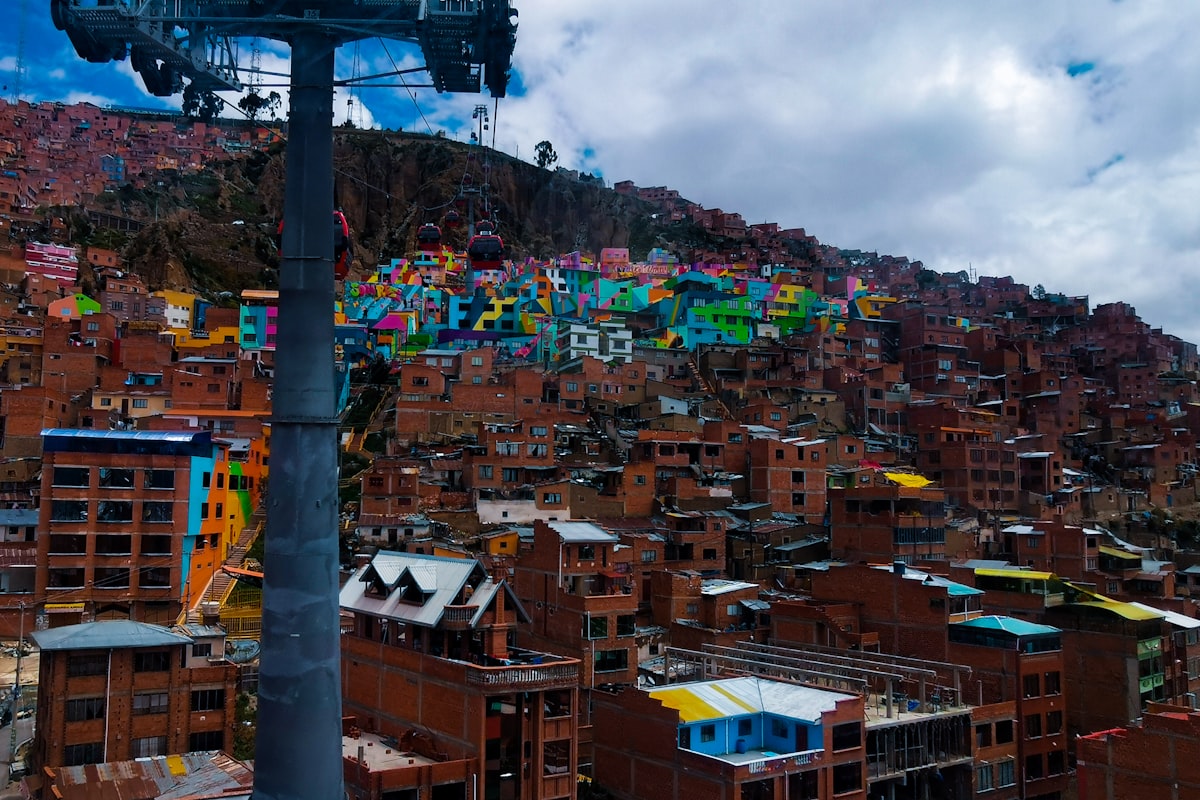
Medellín has an excellent metro system (2 lines + cable cars) that covers the valley well. The cable cars (MetroCable) connect hillside neighbourhoods and are an experience in themselves. Uber works but operates in a grey legal area — some drivers use the app, others prefer InDriver or local alternatives. Taxis are cheap.
Medellín's metro is smaller but the city is smaller. You can get most places in the nomad areas by walking, metro, or a short taxi ride. The compact size is an advantage — nothing feels far away.
In Sour Mango: Use Share Location to coordinate with other nomads and to keep someone informed of your whereabouts when exploring new areas.
Weather: Medellín Wins
Medellín is called the "City of Eternal Spring" for a reason. Average temperatures hover between 18-28°C (64-82°F) year-round. It never gets truly hot. It never gets cold. The altitude (1,500m) keeps it comfortable. Rainy season means afternoon showers, not all-day downpours.
Mexico City sits at 2,240m elevation, which keeps temperatures mild (12-26°C), but the variation is wider. Winter mornings can be genuinely chilly (8-10°C). Summer brings daily afternoon rains that can flood streets. Air quality is a concern — smog days happen, particularly from December through February.
Medellín's weather is nearly perfect for human comfort. Mexico City's is good but has more variability and the pollution factor.
Nightlife: Mexico City Wins
Mexico City's nightlife is vast and varied. Roma, Condesa, and Juárez have cocktail bars, mezcalerías, live music venues, and clubs that run from mellow jazz to full-on techno. The late-night food culture means nights out can extend to 4-5am with tacos at every stage.
Medellín has a strong nightlife scene — salsa clubs in Laureles, electronic music in Provenza, and the legendary Parque Lleras bar scene in El Poblado. Reggaeton and Latin music dominate, which is either a feature or a bug depending on your taste.
Mexico City wins on variety. Medellín wins on energy and dance culture. If you want options, CDMX. If you want to learn salsa and dance until 4am, Medellín.
Visa Situation: Colombia Is Simpler
Colombia:
- Most nationalities get 90 days visa-free, extendable to 180 days per calendar year
- No formal digital nomad visa, but the tourist visa is generous
- V-type visa for longer stays (freelancers/remote workers) available
- Cost: Free for most nationalities (tourist visa)
- Very permissive and easy to manage
Mexico:
- Most nationalities get 180 days visa-free on arrival
- No dedicated digital nomad visa
- Temporary resident visa available for longer stays (income requirement ~$2,500/month)
- The 180-day tourist stamp is generous but not guaranteed — some people get less
Mexico gives you more time upfront (180 days vs 90 days). Colombia's extension process is simple and cheap. Neither country has a proper digital nomad visa, but both are very welcoming to remote workers on tourist visas.
In Sour Mango: Use Visa Requirements to check current entry rules for your nationality. Visa Tracking helps you manage your allowed days — overstaying in either country creates problems for future visits.
The Downsides
Medellín's problems:
- Over-tourism is changing the vibe. El Poblado feels increasingly like a foreigner bubble.
- Altitude can cause mild adjustment issues for the first few days.
- Colombian bureaucracy is slow when you need it (banking, longer-term visas).
- The 90-day tourist visa limit means more frequent border runs if you're staying long-term.
- Spanish is essential for daily life outside nomad areas.
Mexico City's problems:
- Pollution on bad days is genuinely unpleasant.
- The city is massive and commuting across it is time-consuming.
- Earthquakes — they happen. Buildings are built for it, but it's unsettling.
- Water quality requires bottled water or a filtration system.
- Street harassment (particularly of women) is a real issue in some areas.
The Verdict
Choose Medellín if: You want perfect weather. Budget matters. You prefer a smaller, more manageable city. You want a tight-knit nomad community. You're okay with a slower pace.
Choose Mexico City if: Food is a top priority. You want a massive city with endless variety. You need better internet reliability. You want bigger nightlife options. You thrive in a metropolis.
The honest take: Mexico City is the better city. Medellín is the easier city. CDMX offers more in every measurable dimension — food, culture, nightlife, transport, variety — but it demands more from you. The size is overwhelming at first. The pollution is real. The commutes are long. Medellín is immediately liveable from day one. You'll find your cafe, your gym, your neighbourhood, and your people within a week.
Most nomads who try both end up doing Mexico City for 2-3 months (to soak in the culture) and Medellín for 3-6 months (to settle into a rhythm). That combination covers both of Latin America's best.
In Sour Mango: Use Destinations for side-by-side comparisons. Build your Packing Lists — Medellín's spring weather and CDMX's variable climate need different layers. Check Nomad Essentials for health insurance and SIM card recommendations. Use Offline Translation for Spanish — it's absolutely necessary in both cities, and the Colombian and Mexican dialects are different enough to matter. AI Trip Planner can help you plan weekend trips from either city: Guatapé and Jardín from Medellín, Oaxaca and Valle de Bravo from CDMX.
Travel smarter with Sour Mango
Visa tracking, AI trip planner, WiFi speed tests, and a global nomad community — all in one free app.
Explore more guides
Browse all city guides →