
How to Handle Taxes as a Digital Nomad
Disclaimer: This article is general information only, not legal or tax advice. Tax laws vary by country and individual circumstances. Consult a qualified tax professional for your specific situation. Seriously — the cost of professional advice is a fraction of the cost of getting this wrong.
Taxes are the topic every digital nomad avoids until it bites them. The Instagram version of nomad life involves coconuts and coworking spaces. The reality involves figuring out which country has the right to tax you, whether your home country still claims you, and what happens when you earn money in one country while sitting in another.
It's not as terrifying as it sounds. But it does require understanding a few core concepts and making deliberate choices about where you base yourself. Here's the framework.
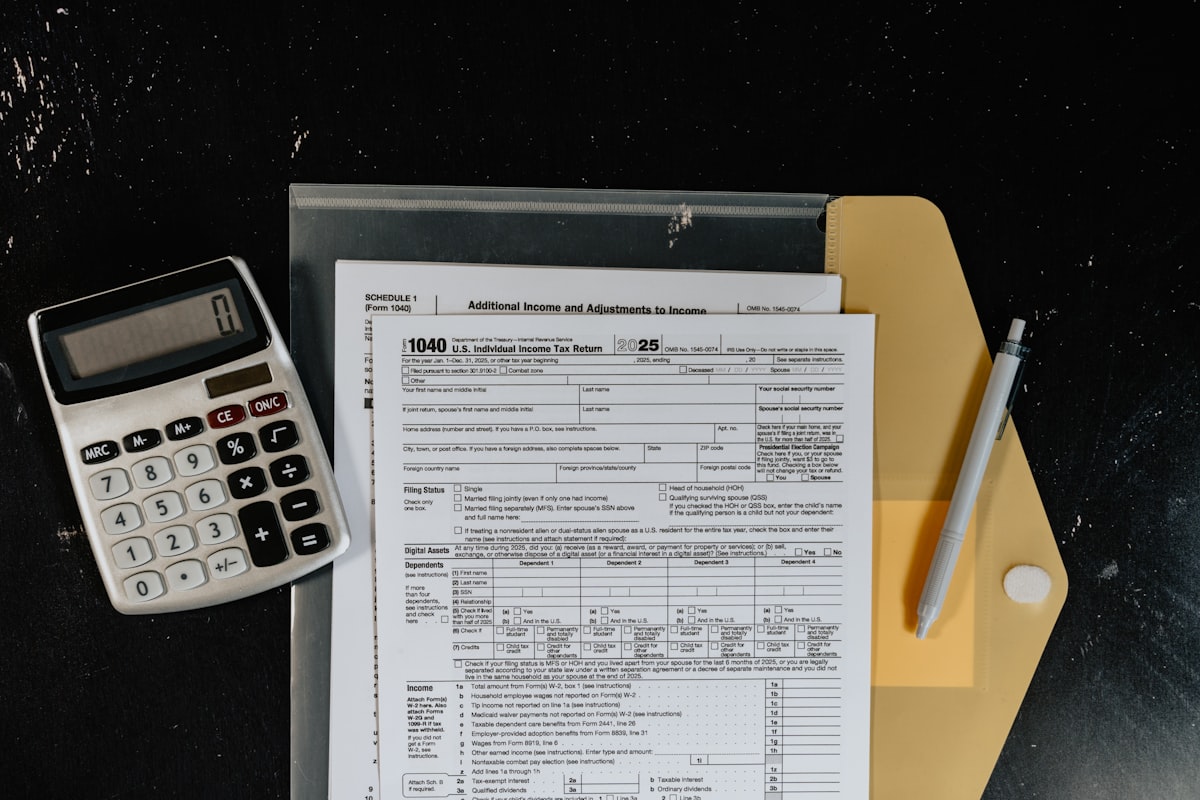
The Core Concept: Tax Residency
Every country has rules about who it considers a tax resident. If you're a tax resident of a country, that country generally wants to tax your worldwide income — meaning everything you earn, regardless of where the money comes from or where you are when you earn it.
The key question for every digital nomad is: Where am I a tax resident?
The answer determines which country's tax rules apply to you, what rates you pay, and what reporting obligations you have. Get this wrong and you might owe taxes in multiple countries, or discover years later that you've been violating filing requirements.
The 183-Day Rule
Most countries use a version of the "183-day rule" — if you spend 183 days or more in a country within a tax year (usually a calendar year), you're considered a tax resident. This is the most common threshold globally, though the details vary.
Important nuances:
- Some countries count differently. The UK uses a Statutory Residence Test that's more complex than a simple day count. Germany counts partial days. Some countries use a 12-month rolling period rather than a calendar year
- Leaving doesn't automatically end residency. Many countries consider you a tax resident even after you leave if you maintain "significant ties" — a home, a spouse, bank accounts, a car, business interests. Simply spending fewer than 183 days doesn't guarantee you've severed tax residency
- Some countries use lower thresholds. Canada considers you resident if you have "significant residential ties" even with fewer than 183 days. Australia looks at your "domicile" and "permanent place of abode"
- Tax treaties matter. If two countries both claim you as a tax resident, a bilateral tax treaty (if one exists) provides "tie-breaker" rules to determine which country has primary taxing rights
In Sour Mango: Use Visa Tracking to monitor exactly how many days you've spent in each country. The tracker counts automatically from your entry dates and sends alerts as you approach key thresholds. This isn't just about visa expiry — it's about knowing when you're crossing the 183-day line that triggers tax obligations. Track every country you visit, not just the ones requiring visas.
US Citizens: You Can't Escape (Easily)
The United States is one of only two countries in the world (the other being Eritrea) that taxes based on citizenship rather than residency. If you're a US citizen or permanent resident, you owe US taxes on your worldwide income regardless of where you live, where you work, or how many years you've been abroad.
The key tools for US nomads:
Foreign Earned Income Exclusion (FEIE)
You can exclude up to approximately $130,000 (adjusted annually for inflation) of foreign earned income from US taxation if you meet either:
- The Bona Fide Residence Test — You're a bona fide resident of a foreign country for an entire tax year
- The Physical Presence Test — You're physically outside the US for at least 330 full days in a 12-month period
The Physical Presence Test is the one most nomads use. "Full days" means you can't be in the US at any point during that 24-hour period — not even a layover.
Foreign Tax Credit (FTC)
If you pay taxes to a foreign country, you can credit those taxes against your US tax liability. This prevents double taxation but requires careful documentation.
FBAR and FATCA
If you have foreign bank accounts with a combined balance exceeding $10,000 at any point during the year, you must file an FBAR (FinCEN 114). Separately, FATCA requires reporting foreign financial assets above certain thresholds on Form 8938. The penalties for failing to file are severe — up to $10,000 per unreported account per year.
The honest truth for US nomads: You will always need to file a US tax return. The FEIE and FTC can significantly reduce or eliminate your tax liability, but the filing obligation never goes away. Budget $500-$1,500/year for an accountant who specialises in expat tax returns. This is not optional.
For Everyone Else: Residency-Based Taxation
If you're not American, your tax situation is determined by where you're considered a tax resident. This gives you significantly more flexibility — and more responsibility for choosing wisely.
Scenario 1: You left your home country cleanly
You severed tax residency (sold or rented out your home, closed local bank accounts, informed the tax authority, established residency elsewhere). Your old country no longer taxes you. Your new country of tax residency taxes you according to its rules.
Scenario 2: You left but didn't sever ties
You're travelling but still have an apartment, a spouse, bank accounts, or other ties in your home country. Many countries will still consider you a tax resident. This is the most common trap — people assume that leaving means they've stopped being tax residents, but their home country disagrees.
Scenario 3: You're a perpetual traveller
You don't spend 183 days anywhere and haven't established residency in any new country. This is legally ambiguous and varies by your nationality. Some countries will still claim you; others won't. This is the scenario most likely to create problems and the one that most urgently requires professional advice.
Territorial Taxation: The Nomad-Friendly Approach
Some countries only tax income earned within their borders. If your income comes from foreign clients and foreign sources, these countries effectively tax you at 0% on that income. This is called territorial taxation and it's the reason certain countries attract digital nomads.
Countries with territorial or favourable territorial-type systems:
- Panama — Only taxes income earned within Panama. Foreign-sourced income is tax-free. The Friendly Nations Visa makes residency accessible
- Paraguay — 10% flat tax, but only on domestic-sourced income. Foreign income is exempt. Residency is straightforward and affordable
- Costa Rica — Territorial taxation. Only Costa Rican-sourced income is taxed. The digital nomad visa exempts nomads from local taxation for the visa duration
- Malaysia — Foreign-sourced income remitted to Malaysia is tax-exempt (as of current policy, though this has been under review — check current status)
- Georgia — The "Small Business Status" allows individuals earning under 500,000 GEL (~$185,000) to pay only 1% tax. Combined with the 365-day visa-free stay for most nationalities, this makes Georgia one of the most attractive bases in the world
Warning: Territorial taxation in the country you're physically in doesn't override your home country's tax claims. If the UK still considers you a tax resident, you owe UK taxes on worldwide income regardless of Panama's territorial system. You need to properly sever home-country residency first.
Popular Tax-Friendly Bases for Nomads
Portugal — Non-Habitual Resident (NHR) Regime
Portugal's NHR regime was one of the most popular nomad tax optimisation tools in Europe. It offered a 20% flat tax on qualifying Portuguese-sourced income and potential exemptions on foreign-sourced income for 10 years.
Important update: The NHR regime was revised significantly in 2024-2025. New applicants face different rules than the original programme. The replacement scheme targets specific sectors and scientific research. If you're considering Portugal for tax reasons, get professional advice on the current rules — the information from pre-2024 articles is outdated.
The D8 digital nomad visa remains excellent for legal residency, even if the tax benefits have changed.
Bulgaria — 10% Flat Tax
Bulgaria has one of the lowest flat income tax rates in the EU at 10%. Social security contributions add to the effective rate, but for self-employed individuals or company owners, the total tax burden can be structured to remain very competitive.
EU membership provides Schengen access and banking infrastructure. The cost of living is among the lowest in the EU. For European nomads looking for a low-tax legal base, Bulgaria is hard to beat.
Estonia — E-Residency
Estonia's e-Residency programme doesn't grant tax residency or the right to live in Estonia. What it does provide is the ability to register and run an EU-based company online, with access to Estonian banking, payment processing, and EU business infrastructure.
What e-Residency is: A way to run a location-independent EU company with minimal bureaucracy. Corporate tax is 0% on retained earnings (you only pay tax when distributing profits). CIT on distributed profits is 20%.
What e-Residency is not: A tax optimisation scheme for personal income. Your personal income tax obligation depends on where you are personally tax resident — not where your company is registered.
For freelancers and solo entrepreneurs who need an EU company structure, Estonian e-Residency is genuinely useful. For personal tax optimisation, it's the wrong tool.
UAE (Dubai)
The UAE has no personal income tax. Zero. This has made Dubai a magnet for high-income remote workers and entrepreneurs. The one-year virtual working visa allows you to live in Dubai while working for a company or clients anywhere in the world.
The catch: Dubai is expensive. Rent alone starts at $1,500-$2,000/month for a studio. Total cost of living is $3,000-$5,000/month. The tax savings only make mathematical sense if your income is high enough that the tax savings exceed the higher living costs. For someone earning $50,000/year, living in Dubai to save on taxes is a net loss. For someone earning $150,000+, the maths can work.
You also need to actually live there — establishing UAE residency requires spending significant time in the country. Simply holding a UAE visa while living in Thailand doesn't make you a UAE tax resident.
Paraguay
Paraguay is the quiet option that tax advisors recommend but Instagram never mentions. The tax system is territorial — only Paraguayan-sourced income is taxed, and the rate is 10%. Foreign-sourced income is exempt. Permanent residency can be obtained relatively quickly and affordably.
The trade-off is that Paraguay isn't a lifestyle destination. Asunción is functional but unremarkable compared to Lisbon or Bali. Most people who establish Paraguayan residency for tax purposes spend the minimum required time there and live elsewhere. Whether this approach withstands scrutiny from your home country's tax authority depends on the specifics — professional advice is essential.
In Sour Mango: Research each of these countries in the Destinations tab for cost-of-living data, internet quality, and visa information. The tax situation is separate from the lifestyle question — a country might be great for taxes but wrong for your daily life, or vice versa.
CFC Rules: The Anti-Avoidance Trap
Controlled Foreign Corporation (CFC) rules exist to prevent people from shifting income to low-tax countries through shell companies while still living in high-tax countries. If your home country has CFC rules (most developed countries do), simply registering a company in a low-tax jurisdiction doesn't eliminate your tax obligations.
Example: You're a UK tax resident who registers an Estonian company. You invoice clients through the company and keep profits there. UK CFC rules can attribute the company's profits to you personally and tax them at UK rates. The Estonian company structure provides no tax benefit.
CFC rules apply to individuals who control foreign companies while being tax resident in a country with these rules. The only way to avoid them is to genuinely change your personal tax residency — which means actually leaving, severing ties, and establishing real residency elsewhere.
Common Mistakes
1. Assuming you're not a tax resident anywhere
If you don't spend 183 days in any country, you might assume no country can tax you. Many countries disagree. Your home country may still consider you resident based on ties, domicile, or citizenship. Being a tax resident "nowhere" is legally precarious and can trigger problems.
2. Confusing visa status with tax residency
Having a tourist visa in Thailand doesn't make you a Thai tax resident. Having a digital nomad visa in Portugal doesn't automatically make you a Portuguese tax resident (though it can, depending on time spent). Visa status and tax residency are separate legal concepts with separate rules.
3. Not filing when required
US citizens must file regardless of where they live. Citizens of many other countries must file a "departure return" when leaving. Some countries require filing even for zero-tax years to maintain your status. Not filing isn't a strategy — it's a time bomb.
4. Ignoring social security obligations
Tax is only half the picture. Many countries require social security contributions from residents, and bilateral social security agreements between countries can create unexpected obligations. EU countries are particularly complex — the A1 certificate system determines which country's social security system covers you.
5. Taking advice from other nomads instead of professionals
The nomad community is full of confidently stated tax advice that is partially or completely wrong. "Just use an Estonian company." "You don't owe taxes if you're not there for 183 days." "Thailand doesn't tax foreign income." Each of these statements is an oversimplification that can cost you thousands. Get professional advice for your specific situation.
When to Get Professional Help
Immediately, if any of these apply:
- You earn over $50,000/year
- You have income from multiple countries
- You own a company or are considering forming one
- You've left your home country and haven't formally addressed your tax residency
- You're a US citizen living abroad
- You're considering a move specifically for tax reasons
- You have investment income, rental income, or capital gains
- You've received a letter from any tax authority
What to look for in a tax advisor:
- Experience with international/expat tax situations specifically (not just domestic tax preparation)
- Familiarity with your home country's tax system AND the countries you're spending time in
- Willingness to advise on structure (not just file returns)
- Flat fees rather than hourly where possible — international tax situations can get complex quickly
Expected cost: $500-$2,000/year for annual filing and basic advisory. $2,000-$5,000 for initial structuring advice if you're setting up a company or changing tax residency. Worth every cent compared to the alternative.
Practical Steps for Every Nomad
Step 1: Know your current tax residency status
Where does your home country currently consider you a tax resident? If you haven't formally severed residency, the answer is probably "still there." Contact a tax professional or your country's tax authority to clarify.
Step 2: Track your days
Know exactly how many days you spend in every country. This matters for the 183-day rule, for visa compliance, and for demonstrating your tax position if questioned. Use Visa Tracking in Sour Mango to track days automatically — it counts from your entry dates and maintains a running total for each country across the calendar year.
Step 3: Keep records
Save invoices, contracts, bank statements, flight bookings, and accommodation receipts. If a tax authority ever questions your residency status or income sources, documentation is your defence. Digital copies are fine — store them in cloud storage with country-by-country folders.
Step 4: File everywhere you're required to
Even if your tax liability is zero (because of exclusions, credits, or territorial taxation), file returns where required. Not filing creates penalties, interest, and potential criminal liability that far exceed any tax you might owe.
Step 5: Review annually
Tax laws change. The Portuguese NHR revision is a perfect example — a regime that thousands of nomads relied on was fundamentally altered. Review your tax position every year, ideally with professional help, to ensure your strategy still works under current rules.
In Sour Mango: The Visa Tracking feature doubles as your day-count tracker — add every country entry and the app maintains a running count of days per country per year. Set alerts for approaching the 90-day and 183-day thresholds. Use Visa Requirements to check entry rules for your passport before travelling to potential tax-base countries. Browse Destinations for cost-of-living data to evaluate whether a tax-friendly country also works for your lifestyle and budget.
The Bottom Line
Taxes as a digital nomad aren't optional, and they're not as simple as "I'm not in my home country so I don't owe anything." The system is complex, country-specific, and changes regularly.
The good news is that with proper planning, the nomad lifestyle can be genuinely tax-efficient. Many nomads legally reduce their tax burden significantly by choosing the right base, structuring their income appropriately, and filing correctly. The key word is "legally" — this requires understanding the rules and getting professional help, not ignoring the issue and hoping nobody notices.
The cost of a good international tax advisor ($500-$2,000/year) is one of the best investments you'll make as a nomad. The cost of getting it wrong — back taxes, penalties, interest, potential criminal liability — is exponentially higher.
Handle it properly, and taxes become a manageable line item rather than a ticking time bomb. That peace of mind is worth the accountant's fee.
Track your days in every country, monitor visa countdowns, compare tax-friendly destinations, and plan your next move with AI-powered itineraries. Download Sour Mango and stay on top of the details that matter.
Travel smarter with Sour Mango
Visa tracking, AI trip planner, WiFi speed tests, and a global nomad community — all in one free app.
Explore more guides
Browse all city guides →