
First-Time Digital Nomad? Start Here
You've got a remote job, a laptop, and a vague desire to work from somewhere that isn't your apartment. Good. That's all you need to start. The rest is logistics — and logistics are solvable.
This guide covers everything you need to actually make the move. Not the "follow your dreams" stuff. The practical, boring, important stuff that determines whether your first months abroad are productive or a disaster.
Step 1: Pick Your First City (Don't Overthink It)
Your first destination doesn't need to be perfect. It needs to be easy. That means:
- Fast, reliable internet — non-negotiable if you work remotely
- Low cost of living — so financial stress doesn't ruin the experience
- Established nomad community — because being alone in a foreign country gets old fast
- Good timezone overlap — with your clients or team
- Easy visa situation — you don't want bureaucracy as your introduction to this lifestyle
For most first-timers, that means one of these cities:
- Chiang Mai, Thailand — the classic starter city. Cheap, fast internet, massive community
- Lisbon, Portugal — European timezone, walkable, English-friendly
- Mexico City, Mexico — US timezone, incredible food, affordable
- Bali, Indonesia — beautiful, social, but slightly more chaotic
- Medellin, Colombia — great weather year-round, growing community
Use the AI Trip Planner in Sour Mango to get personalized recommendations based on your budget, timezone needs, and preferences. It factors in current visa policies, cost of living data, and community size — which saves you hours of Reddit research.
Browse the Destinations section to compare cities side-by-side on the metrics that actually matter: internet speed, monthly cost, safety, walkability, and how many nomads are currently there.
Step 2: Sort Your Visa Situation
This is where most people get confused, and it's simpler than you think. For your first trip, you have a few options:
- Tourist visa — most countries give you 30-90 days on arrival. Technically you shouldn't be "working," but remote work for a foreign employer is a grey area almost everywhere
- Digital nomad visa — more countries offer these every year. Thailand's DTV, Portugal's D8, Colombia's digital nomad visa, Spain's Beckham law. They give you legal status to work remotely for 6-12 months
- Visa runs — some nomads hop borders to reset tourist visas. It works but it's stressful and increasingly risky
My advice: For your first trip, a tourist visa is fine for 1-3 months. If you plan to stay longer, apply for a digital nomad visa before you go. The process usually takes 2-4 weeks and requires proof of income or employment.
Check Visa Requirements in Sour Mango for your passport. It shows entry requirements, maximum stays, and available nomad visa options for every country. Set up Visa Tracking so you get reminders before your visa expires — overstaying is a serious problem that can get you banned from a country.
Step 3: Get Your Money Right
Banking and finances cause more headaches than anything else for new nomads. Here's the setup that works:
Before You Leave
- Tell your bank you're traveling — or they'll freeze your card on the first foreign transaction
- Get a no-foreign-transaction-fee card — Wise or Revolut are the standard. Both let you hold multiple currencies and offer real exchange rates
- Set up a backup payment method — always have two cards from different providers. If one gets blocked, you need a backup
- Download your bank's app — make sure you can manage everything from your phone
On the Ground
- Use ATMs from major banks — avoid standalone ATMs, they charge ridiculous fees
- Pay by card when you can — the exchange rate is almost always better than cash conversion
- Keep some local cash — street food, taxis, and small shops often don't take cards
Sour Mango's Currency Converter gives you live rates so you always know what you're actually paying. The Price Checker lets you compare costs across cities — useful when you're deciding between destinations or budgeting for your trip.
Step 4: Get Travel Insurance
Skip this section at your own risk. A single hospital visit abroad without insurance can cost thousands. More on this in our full travel insurance guide, but the short version:
- SafetyWing — built for nomads, ~$45/month, covers you globally
- World Nomads — good for shorter trips, easy to buy after you've left home
- Genki — popular in Europe, flexible plans
Get insurance before you leave. It's the most boring purchase you'll make and the most important.
Quick budget: Plan for $45-$80/month for decent coverage. That's less than one night in a hospital in most countries. The math is simple.
Step 5: Pack Light (Seriously)
You're not going on vacation. You're relocating your work life. Pack for flexibility, not for every scenario.
The Non-Negotiables
- Laptop — your most important possession. Consider a lightweight model if you don't have one
- Noise-cancelling headphones — you will work in noisy environments. Sony WH-1000XM5 or AirPods Pro
- Universal power adapter — one good one beats five cheap ones
- Portable charger — 20,000mAh minimum
- Unlocked phone — so you can use local SIMs anywhere
Clothing
- One week of clothes — you can do laundry everywhere. Seriously, everywhere
- Layers — even tropical countries have aggressive air conditioning
- One nice outfit — for coworking events or meetings
- Quick-dry everything — especially if you're heading to humid climates. Cotton takes forever to dry in Southeast Asia
What NOT to Pack
- Books (use a Kindle)
- More than two pairs of shoes
- "Just in case" items — if you haven't used it in a week, you don't need it
- A full toiletry kit — you can buy shampoo anywhere on earth
- Towels — every Airbnb and rental provides them
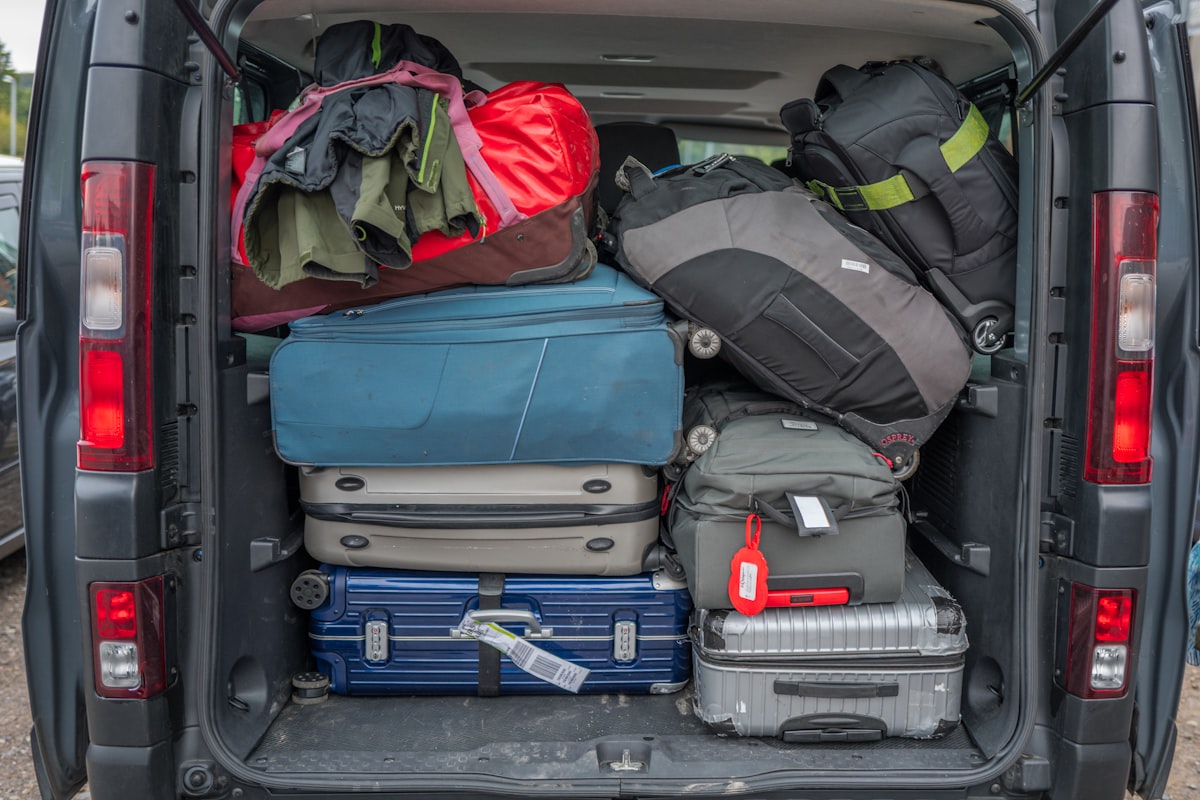
The goal is to fit everything in one carry-on bag and one personal item. If you can't carry it through an airport without checking luggage, you've packed too much. Budget airlines in Southeast Asia and Europe charge brutal fees for checked bags.
Check the Packing Lists in Sour Mango for destination-specific recommendations. Heading to Southeast Asia? You'll need different gear than Eastern Europe. The lists update based on season and destination, so you're not packing a rain jacket for a dry month.
The Nomad Essentials section covers the gear that experienced nomads actually use daily — not the Instagram-influencer gadget list, but the practical stuff that makes remote work abroad functional.
Step 6: Find Your First Apartment
Don't book long-term accommodation before you arrive. Here's the move:
- Book an Airbnb or hostel for 3-5 days — just enough to land and orient yourself
- Walk the neighbourhoods — you'll quickly figure out where you want to be
- Ask other nomads — the community always knows the best deals
- Negotiate a monthly rate — everything is negotiable, especially for stays longer than two weeks
For your first month, Airbnb is fine. After that, you'll find better deals through local Facebook groups, word of mouth, and walking into apartment buildings directly.
More on this in our apartment hunting guide.
Step 7: Set Up Your Workspace
You need a reliable place to work. Options:
Cafes
- Pros: Cheap, social, flexible, great for light work
- Cons: Unreliable WiFi, noise, limited power outlets, pressure to keep ordering
Coworking Spaces
- Pros: Fast WiFi, professional environment, community events, meeting rooms
- Cons: Monthly cost ($50-$200 depending on city), can feel corporate
Your Apartment
- Pros: No commute, total control of environment, free
- Cons: Lonely, requires good apartment WiFi, easy to become a hermit
My recommendation for beginners: Get a coworking membership for your first month. It gives you a guaranteed workspace and an instant social circle. Use cafes for variety on light days. Work from home when you need deep focus.
Use the WiFi Speed Test in Sour Mango to test any cafe or space before committing. Your results save automatically, so you'll build a personal map of reliable work spots in every city you visit.
Step 8: Build Your Social Life
Loneliness is the number one reason people quit the nomad lifestyle. Take this seriously.
How to Meet People
- Coworking events — most spaces host weekly social events
- Nomad meetups — check Facebook groups, Meetup.com, or Eventbrite for your city
- Group activities — join a gym, take a surf lesson, go to a language exchange
- Be a regular — go to the same cafe, same gym, same coworking space. Familiarity breeds friendship
Sour Mango's Mates feature connects you with other nomads in your city. You can see who's around, what they do, and send a message. It's less awkward than approaching strangers in a cafe. The Tribes feature lets you find groups based on interests — runners, developers, freelance writers, crypto people, whatever your thing is.
The Friend-Making Mindset
You have to be proactive. In your home city, friendships develop organically over years. As a nomad, you have weeks or months. That means:
- Say yes to everything in your first two weeks
- Invite people to lunch or coffee — don't wait to be invited
- Join group chats for your city (WhatsApp, Telegram, Discord)
- Don't just hang out with people from your own country
Step 9: Stay Productive
Working abroad is harder than working from home. Distractions are better (beaches vs. your couch), and routines are harder to maintain. Some principles:
- Set working hours and stick to them — flexibility doesn't mean working whenever. It means choosing your hours and protecting them
- Separate work and exploration — don't try to sightsee and work in the same afternoon. You'll do both badly
- Communicate with your team — be clear about your timezone and availability
- Batch your meetings — if you're 8 hours ahead, stack calls in the morning and do deep work in the afternoon
- Have a morning routine — it doesn't matter what it is. Coffee, walk, gym, journaling. Something consistent that signals "work mode" regardless of which country you're in
- Use a task manager — when your environment changes daily, your task system is the one constant. Keep it simple: what are you doing today, what's due this week
The Timezone Problem
If your team or clients are in a different timezone, this becomes your biggest productivity challenge. Here's how to handle it:
- Overlap hours — find 2-3 hours where you're both available and protect that window for meetings and collaboration
- Async by default — write detailed messages instead of scheduling calls. Use Loom for walkthroughs, write docs instead of presenting live
- Morning or evening shift — pick one end of the day for live communication and use the other 5-6 hours for deep work. Most nomads prefer getting calls done early and having the afternoon free
- Set expectations once — send your team a message: "I'm UTC+7, available 8am-12pm your time, async for everything else." Do this when you arrive, not when conflicts start
Dealing With Distractions
The cafe has amazing pastries. The beach is a 10-minute walk. There's a temple you haven't visited yet. Your new friend just invited you to lunch. This is the tax on nomad productivity.
The fix isn't willpower — it's structure. Work first, play second. Finish your most important task before you leave your apartment in the morning. Then the afternoon can be flexible without guilt.
Step 10: Know When to Move (and When to Stay)
New nomads often move too fast — a new city every two weeks. This is tourism, not nomad life. You can't build a routine, workspace, or social circle in two weeks.
The sweet spot for your first destination is 1-3 months. Long enough to settle in, short enough to try somewhere new before you get restless.
When you do move, use the AI Trip Planner in Sour Mango to find your next destination based on what worked (and what didn't) about your current one. Use Share Location to let friends and family back home know where you are without the constant "where are you now?" texts.
Common First-Timer Mistakes
Before you go, learn from the people who went before you:
- Moving too fast — a new city every week is tourism, not nomad life. You'll burn out and never build a routine
- Under-budgeting — your first month always costs more than expected. Setup costs (SIM card, coworking deposit, apartment deposit) add up. Budget 30% extra for month one
- Ignoring health — new food, new climate, jet lag, irregular sleep. Your body will protest. Drink water, sleep enough, and don't skip exercise
- Working too much — you moved abroad to live a different life, not to stare at the same screen in a prettier location. Set boundaries and actually explore
- Working too little — the opposite extreme. You're on "vacation mode" for three weeks and suddenly you're behind on everything. Find the balance fast
- Not telling your bank — getting your card frozen on day two in a foreign country is a terrible experience. Call before you leave
- Comparing to others — some nomads make $300k and surf every morning. Some are scraping by. Your journey is yours. Social media shows the highlight reel
- No emergency fund — things go wrong. Flights get cancelled, laptops break, you get sick. Have at least $2,000-$3,000 accessible at all times
- Ignoring local culture — you're a guest. Learn basic phrases, respect local customs, dress appropriately for temples and religious sites. The Local Food feature in Sour Mango helps you eat like locals do, which is both cheaper and a sign of respect
The Bottom Line
Becoming a digital nomad isn't a personality type — it's a logistics problem. You need a way to earn money remotely, a place with decent WiFi, and enough organization to handle the admin. Everything else, you figure out as you go.
Stop researching. Pick a city. Book a one-way flight. The rest will sort itself out faster than you think.
Download Sour Mango to plan your first trip, check visa requirements, test WiFi speeds, and connect with the nomad community on the ground. It's the toolkit we wish existed when we started.
Travel smarter with Sour Mango
Visa tracking, AI trip planner, WiFi speed tests, and a global nomad community — all in one free app.
Explore more guides
Browse all city guides →