Seoul — Hyper-Connected, Hyper-Fast, Hyper-Fun
Seoul is what happens when a city decides that speed, connectivity, and convenience are non-negotiable. The internet is the fastest in the world. The subway runs on time to the second. Convenience stores on every corner are open 24 hours and sell everything from hot meals to phone chargers to fresh sushi. Coffee shops outnumber people, and every single one has WiFi that would make your home ISP weep.
For digital nomads, Seoul is infrastructure paradise. The technology just works — reliably, fast, everywhere. Pair that with food that costs $5-8 per meal, a transit system that makes European cities look primitive, and a culture that takes work (and play) seriously, and you get a city that's perfectly calibrated for productive remote work.
The Internet Situation
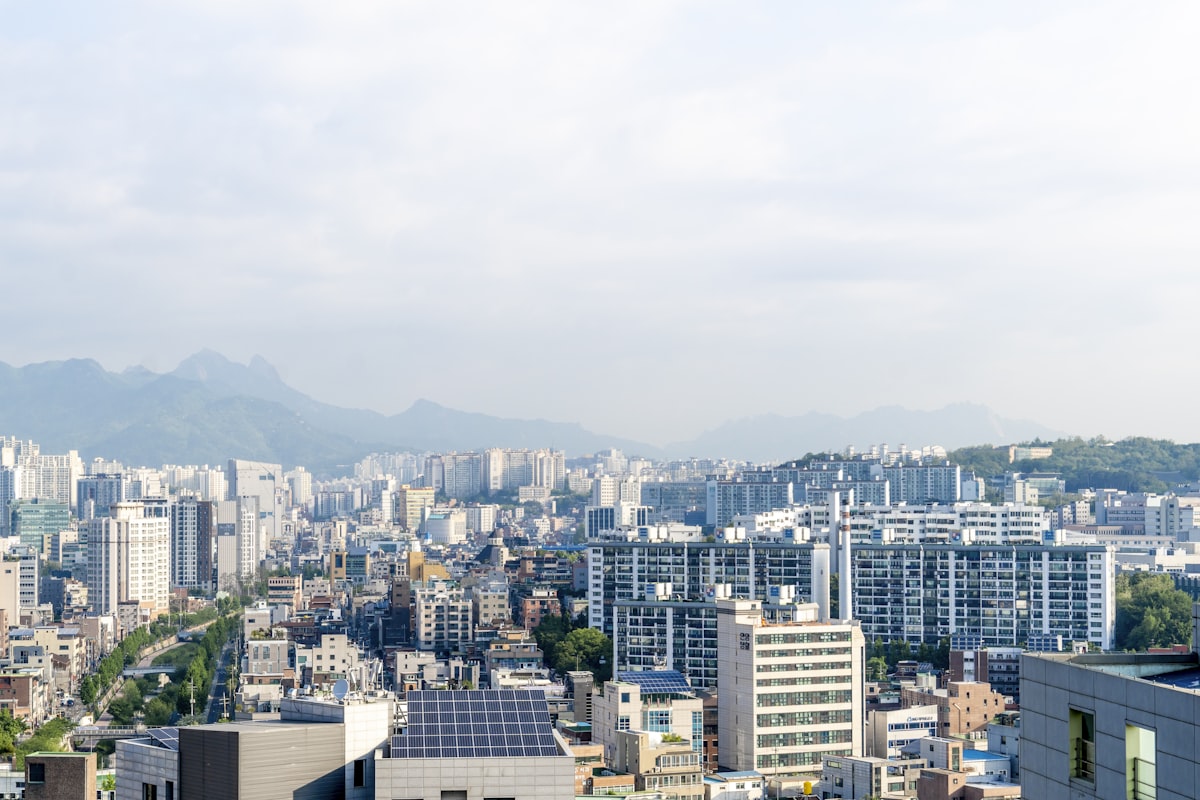
Seoul has the fastest internet of any major city in the world, and it's not even close. South Korea has been the global leader in broadband infrastructure for two decades, and it shows in every apartment, cafe, and subway car.
Apartments typically come with 500 Mbps to 1 Gbps fibre from KT, SK Broadband, or LG U+. Gigabit is standard, not premium. Many buildings have 2.5 Gbps or even 10 Gbps options available.
Cafes are universally connected. Even the smallest neighbourhood coffee shop typically offers 50-100 Mbps. The big chains — Starbucks, A Twosome Place, Hollys — all push 100-200 Mbps. Independent specialty cafes are often just as fast.
The subway has WiFi. Every station, every car. It's not blazingly fast (20-40 Mbps), but it works. You can genuinely take a Zoom call while commuting.
Mobile data is excellent. 5G coverage blankets the entire city through SKT, KT, and LG U+. A prepaid SIM or eSIM with unlimited data costs KRW 30,000-50,000 ($22-$37/month). Most nomads go for a 30-day unlimited data eSIM from providers like Trazy or Klook.
Pro tip: Use the WiFi Speed Test in Sour Mango, but honestly, in Seoul you'll rarely find a bad connection. The real value is tracking which cafes have the best setup for working — power outlets, comfortable seating, and good lighting matter more than speed here, because the speed is fast everywhere.
Cost of Living: More Affordable Than You Think
Seoul has a reputation for being expensive, and compared to Southeast Asia, it is. But compared to other world-class cities — Tokyo, Singapore, London, New York — Seoul is a genuine bargain. The food, transport, and daily essentials are surprisingly affordable. Rent is the main expense.
Budget Nomad (~KRW 1,800,000 / $1,350/month)
- Rent: KRW 800,000-1,100,000 ($600-$825) — studio or one-room (officetel) in Mapo-gu, Seodaemun-gu, or Gwanak-gu. Monthly rent without key money (jeonse), or a goshiwon (micro-room) for KRW 400,000-600,000 ($300-$450)
- Coworking: KRW 150,000-250,000 ($112-$187) — monthly hot desk
- Food: KRW 400,000-500,000 ($300-$375) — eating out for every meal is normal and cheap
- Transport: KRW 60,000-80,000 ($45-$60) — subway and bus with T-money card
- Phone: KRW 30,000-50,000 ($22-$37) — unlimited data SIM
- Fun: KRW 200,000-300,000 ($150-$225) — soju nights, noraebang, weekend trips
- Health insurance: KRW 80,000-110,000 ($60-$82) — SafetyWing or Korean NHI
Comfortable Nomad (~KRW 3,000,000 / $2,250/month)
- Rent: KRW 1,200,000-1,800,000 ($900-$1,350) — nice one-bed in Itaewon, Hongdae, or Gangnam. Furnished, modern, well-connected
- Coworking: KRW 250,000-400,000 ($187-$300) — dedicated desk at WeWork or FASTFIVE
- Food: KRW 600,000-800,000 ($450-$600) — mix of Korean restaurants, international dining, delivery
- Transport: KRW 80,000-100,000 ($60-$75)
- Phone: KRW 40,000
- Fun: KRW 400,000-500,000 ($300-$375) — craft cocktails in Itaewon, K-pop concerts, day trips to Busan or Jeonju
- Health insurance: KRW 80,000-110,000
The food prices are the revelation. A proper Korean meal — bibimbap, kimchi jigae, or a full Korean BBQ lunch set — costs KRW 8,000-12,000 ($6-$9). Convenience store meals (surprisingly good) cost KRW 3,000-5,000 ($2.25-$3.75).
In Sour Mango: Open Seoul in the Destinations tab for the full cost breakdown. The Currency Converter handles KRW instantly — the numbers look intimidating (everything is in thousands) but the app makes sense of it.
The Visa Situation
South Korea has introduced options for digital nomads, though the landscape is still evolving.
Workation Visa (K-1-1)
South Korea's digital nomad visa, launched in 2024:
- Up to 2 years (1 year initial, renewable for 1 year)
- Must earn at least KRW 85,000,000/year (~$63,000) from foreign employment or freelance work
- Ages 18-65
- Valid health insurance required
- Processing time: 2-4 weeks
- Fee: approximately KRW 60,000 ($45)
- Can bring spouse and dependents
Alternatively:
- 90-day visa-free entry — Available for most Western passport holders. Generous enough for a full season
- K-ETA (Korea Electronic Travel Authorization) — Required pre-arrival registration for visa-free entry. KRW 10,000 ($7.50), processed online in 24-72 hours
- D-10 Job Seeker Visa — 6 months, if you're exploring employment in Korea
- H-1 Working Holiday Visa — For ages 18-30 from eligible countries
The 90-day visa-free entry is the easiest start. For the Workation visa, the income requirement is high — $63,000/year — but if you qualify, it's one of the most generous digital nomad visas in Asia.
In Sour Mango: Check Visa Requirements for your passport's specific Korea entry rules. Don't forget the K-ETA requirement. Track your stay with Visa Tracking — countdown notifications keep you legal.
Best Neighbourhoods for Nomads
Seoul is massive — over 10 million people in the city proper, 25 million in the metro area. The subway makes it all accessible, but choosing the right gu (district) shapes your daily experience.
Hongdae (Mapo-gu)
Best for: Social nomads, nightlife, creative energy, cafe culture
Hongdae (around Hongik University) is Seoul's creative and nightlife epicentre. The streets are alive with buskers, indie shops, art installations, and an overwhelming number of cafes and bars. It's young, loud, and endlessly energetic. The nomad and expat community gravitates here for good reason.
- Seoul's best cafe density — hundreds within walking distance
- Nightlife central — clubs, bars, live music venues packed into a few blocks
- Excellent street food scene
- Subway Lines 2, 6, and Airport Railroad
- KRW 700,000-1,200,000/month for a studio
- Can be noisy at night if your apartment is near the main strips
Itaewon (Yongsan-gu)
Best for: International nomads, English-friendly, food diversity
Historically the "foreigner district" near the old US military base, Itaewon has evolved into Seoul's most international neighbourhood. More English is spoken here than anywhere else in the city, and the restaurant scene covers every cuisine on earth. The adjacent Hannam-dong area is more upscale and quieter.
- Most English-friendly neighbourhood in Seoul
- Incredible international food — Mexican, Middle Eastern, Indian, African, Italian
- Craft beer scene centred on Gyeongnidan-gil
- Yongsan-gu coworking spaces nearby
- KRW 900,000-1,500,000/month for a one-bed
- Changing rapidly — formerly gritty, now increasingly polished
Gangnam (Gangnam-gu)
Best for: Tech workers, corporate nomads, modern infrastructure
South of the Han River, Gangnam is Seoul's business and tech district. It's sleek, modern, and packed with coworking spaces and corporate offices. Less personality than Hongdae or Itaewon, but unmatched for professional infrastructure. The Gangnam Station area is frenetic; Apgujeong and Sinsa-dong are more refined.
- Major coworking hub — WeWork, FASTFIVE, and many Korean spaces
- K-beauty and fashion centred on Sinsa-dong (Garosugil)
- Excellent subway connectivity
- KRW 1,000,000-1,800,000/month for a one-bed
- More corporate atmosphere, less bohemian
Seongsu-dong (Seongdong-gu)
Best for: Creatives, industrial-chic aesthetic, the "Brooklyn of Seoul"
A former industrial district that's transformed into Seoul's trendiest neighbourhood. Converted warehouses house cafes, galleries, boutiques, and creative studios. It's where Seoul's design-forward crowd works and plays.
- Converted factories and warehouses turned into stunning cafes
- Growing coworking scene
- More spacious, less compressed than Hongdae
- KRW 800,000-1,300,000/month for a studio
- Instagram-perfect aesthetics everywhere
- Slightly less connected by subway (Line 2 and Bundang Line)
In Sour Mango: Check the Seoul Destinations guide for neighbourhood breakdowns. Compare districts side by side to match your vibe.
Coworking Spaces Worth Your Money
WeWork (Multiple Locations)
WeWork has a massive Seoul presence with locations across Gangnam, Jongno, Yeouido, and Seongsu. The global standard applies: professional, reliable, fast internet. The Gangnam locations are the most popular with nomads.
- Day pass: KRW 40,000 ($30)
- Monthly hot desk: KRW 350,000 ($262)
- Dedicated desk: KRW 500,000 ($375)
- Fast WiFi (300+ Mbps), meeting rooms, phone booths
- Global access for members who travel
FASTFIVE (Multiple Locations)
Korean coworking chain with modern, well-designed spaces. More affordable than WeWork, with a strong local community. The Gangnam and Hongdae locations are popular with nomads.
- Monthly hot desk: KRW 200,000 ($150)
- Dedicated desk: KRW 350,000 ($262)
- Korean-designed aesthetic — minimal, clean, efficient
- Good community events and networking
- Slightly less English than WeWork
Hive Arena (Gangnam)
A newer space focused on tech workers and startups. Excellent internet infrastructure, modern design, and a community skewed toward developers and product people.
- Monthly hot desk: KRW 220,000 ($165)
- Tech-focused community
- Excellent infrastructure
- Regular demo days and tech talks
The Cafe Circuit
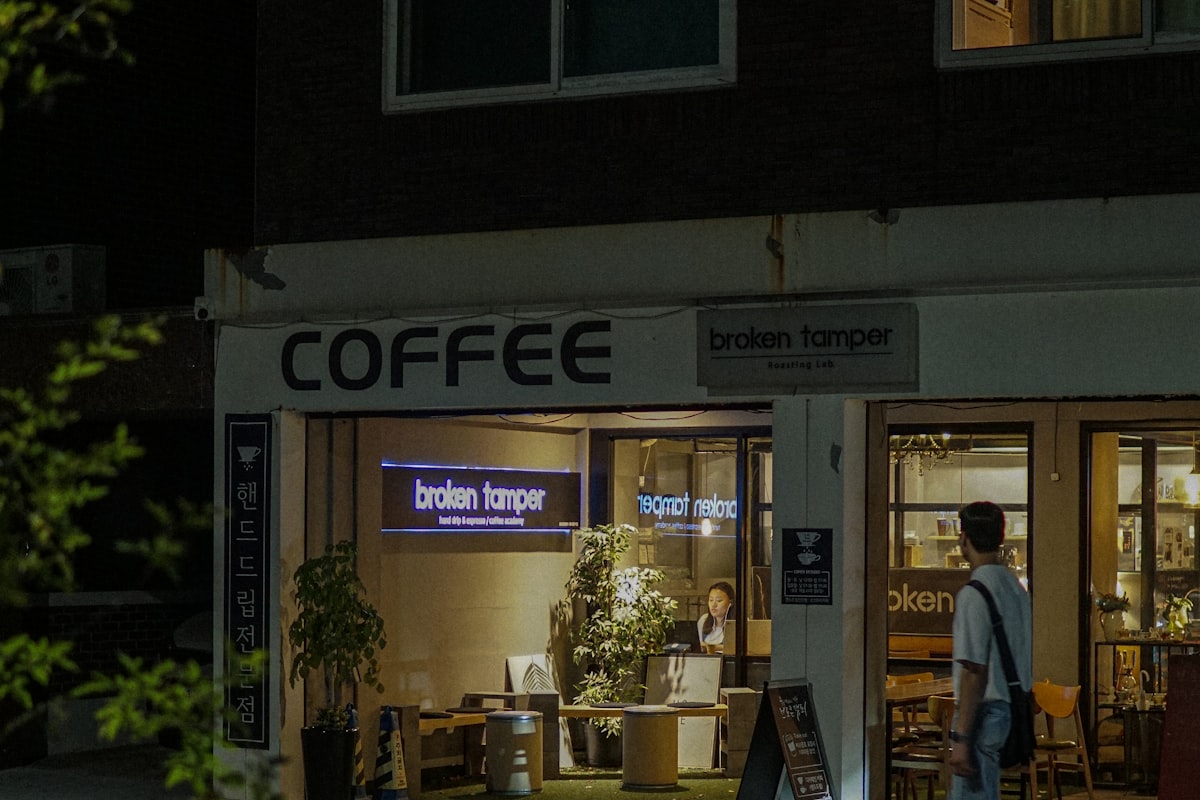
Seoul has more cafes per capita than almost any city on earth. Working from cafes is not just accepted — it's expected.
- Blue Bottle Coffee (multiple locations) — The California chain found its spiritual home in Seoul. Beautiful spaces, fast WiFi, serious coffee. The Seongsu-dong and Samcheong-dong locations are stunning
- FRITZ Coffee Company (Mapo-gu) — Seoul-born specialty roaster with a loyal following. Industrial-chic space, excellent beans, power outlets everywhere
- Anthracite (Hapjeong / Seongsu) — Converted warehouse roastery. Massive space, excellent coffee, a favourite with laptop workers
- A Twosome Place (everywhere) — Korean chain with consistently fast WiFi, outlets, and a generous policy toward laptop workers. The reliable backup option
- Starbucks (everywhere) — Not exciting, but Seoul Starbucks locations are spacious, well-connected (100+ Mbps), and have the most consistent WiFi in the city
In Sour Mango: Run the WiFi Speed Test at every cafe — though in Seoul, you're mostly ranking by seating comfort and outlet availability, since the internet is fast everywhere.
The Food: Korean Cuisine Is a Superpower
Korean food is one of the great cuisines of the world, and in Seoul you get it at its best and cheapest. Eating out for every meal is the default — Korean kitchens in small apartments are often minimal. The culture expects you to eat out.
Korean Restaurants (KRW 7,000-15,000 / $5.25-$11.25)
- Kimchi Jjigae — Fiery kimchi stew with pork, tofu, and rice. The quintessential Korean comfort food. KRW 7,000-9,000. Available at literally every Korean restaurant. Comes with banchan (side dishes) — refillable for free
- Bibimbap — Rice topped with vegetables, meat, egg, and gochujang (chili paste). Mix it all together. KRW 8,000-12,000. Go to: Gogung in Jongno for the Jeonju-style classic
- Korean BBQ — Grilling your own meat at the table is a social ritual. Samgyeopsal (pork belly) is the affordable classic: KRW 12,000-16,000 per person for unlimited meat at many restaurants. Go to: Mapo district for pork BBQ, Majang Meat Market area for premium beef at wholesale prices
- Tteokbokki — Spicy rice cakes in gochujang sauce. The ultimate street food. KRW 3,000-5,000. Go to: Sindang Tteokbokki Town for the OG experience
- Naengmyeon — Cold buckwheat noodles in icy broth. The summer essential. KRW 9,000-12,000. Go to: Wooraeoak in Junggu (operating since 1946)
- Jjimdak — Braised chicken with glass noodles, vegetables, and soy sauce. Rich and comforting. KRW 15,000-25,000 for 2-3 people
- Kimbap — Korean rice rolls. Cheap, filling, available everywhere. KRW 2,500-4,000 per roll from kimbap shops
Street Food:
- Gwangjang Market — Seoul's oldest and most famous market. Bindaetteok (mung bean pancakes), mayak gimbap (mini rice rolls), and yukhoe (raw beef) — all legendary. Go for lunch on a weekday to avoid the worst crowds
- Myeongdong Street Food — Touristy but fun. Hotteok (sweet pancakes), corn dogs, egg bread, and tteokbokki along the main strips
- Namdaemun Market — Massive market with food stalls in the alleys. More local than Myeongdong, equally delicious
- Tongin Market (Jongno) — Famous for its dosirak (lunchbox) system where you buy tokens and fill a box from different stalls. A fun, affordable meal
Convenience Store Culture:
This deserves special mention. Korean convenience stores (CU, GS25, 7-Eleven, Emart24) are a legitimate meal option:
- Triangle kimbap: KRW 1,500 ($1.12)
- Instant ramyeon with hot water station: KRW 1,500-2,000
- Bento boxes: KRW 3,500-5,000 — genuinely good quality
- Every store has a microwave, hot water dispenser, and eating area
- Open 24/7, on every corner
In Sour Mango: Browse Local Food in the Seoul destination guide for dish recommendations with prices and locations. The Currency Converter makes KRW prices instantly understandable.
Transport: The Best Subway System You'll Ever Use
Seoul's public transport is a masterpiece. The subway alone has 23 lines and 700+ stations, and it runs with clockwork precision.
Subway (Metro)
- 23 lines, colour-coded and numbered. Coverage is comprehensive — there's a station within walking distance of almost everywhere you'd want to be
- Fares: KRW 1,250-2,150 ($0.94-$1.61) based on distance
- T-money card — Rechargeable transit card, available at any convenience store (KRW 2,500 for the card). Tap on, tap off. Also works on buses and in some taxis and convenience stores
- Runs from ~5:30am to ~midnight. Trains every 2-5 minutes during peak hours
- Free WiFi in every station and on every train
- Air-conditioned in summer, heated in winter
- Platform screen doors at every station (safety standard)
- Signage in Korean and English
Bus
Extensive network filling gaps between subway stations:
- Blue buses (trunk routes): KRW 1,200
- Green buses (feeder routes): KRW 1,100
- Free transfers between subway and bus within 30 minutes using T-money
Taxi
Cheap by global standards:
- Base fare: KRW 4,800 ($3.60)
- Most city rides: KRW 7,000-15,000 ($5.25-$11.25)
- Use Kakao T app for ride-hailing (Korea's equivalent of Uber)
- Taxis are metered, safe, and plentiful
KTX (High-Speed Rail)
- Seoul to Busan: 2 hours 15 minutes, KRW 59,800 ($45)
- Seoul to Jeonju: 1 hour 40 minutes, KRW 33,800 ($25)
- Book through the Korail app
Healthcare
South Korea has excellent, affordable healthcare:
- Samsung Medical Center (Gangnam) — One of Asia's top hospitals
- Severance Hospital (Sinchon) — Excellent international department with English-speaking staff
- Asan Medical Center — Another world-class option
- General consultation: KRW 15,000-30,000 ($11-$22) at a local clinic
- Dental: Professional cleaning KRW 30,000-80,000 ($22-$60). Korea is a dental tourism destination
- Pharmacies: On every corner. Pharmacists dispense based on doctor prescriptions — the consultation-pharmacy system is separate but efficient
Insurance tip: SafetyWing covers short-term stays. For the Workation visa, health insurance is required — Korean National Health Insurance (NHI) enrolment is mandatory for stays over 6 months, with contributions starting at ~KRW 130,000/month.
The Community
Seoul's nomad community is growing rapidly, driven by the Workation visa and Korea's global cultural influence.
- Seoul Digital Nomads — Growing Facebook and Meetup community with regular events
- Seoul Startups — Active tech and startup meetup scene, especially in Gangnam
- Language exchange — Seoul has countless language exchange meetups and apps. Great for meeting locals and learning Korean
- Korean classes — Seoul Global Center offers free Korean classes for foreigners. Private academies (hagwon) are everywhere
- Fitness — Climbing gyms (Korea is a climbing powerhouse), CrossFit, yoga, and the Han River running paths. The Yeouido-Banpo stretch along the Han is a 20km+ riverside path popular for running, cycling, and picnics
- Weekend escapes — Busan (2.5 hours KTX), Jeju Island (1-hour flight, volcanic island paradise), Jeonju (traditional Korean town, 1.5 hours KTX), DMZ tour (half-day from Seoul), Seoraksan National Park (2.5 hours by bus, stunning autumn foliage)
In Sour Mango: Find nomads in Seoul through Mates. Create a Tribe group for your Seoul crew. Use Meetups to find language exchanges, coworking sessions, and weekend trip groups.
The Downsides (Being Honest)
Language Barrier
Korean is genuinely difficult for English speakers, and outside Itaewon, English proficiency is lower than you might expect. Menus, signs, and official documents are primarily in Korean. Learning to read Hangul (the Korean alphabet) takes about 2 hours and is absolutely essential — it was designed to be logical and learnable. Translation apps (Papago is the best for Korean) help enormously. But daily interactions can be challenging.
Housing Complexity
Korea's rental system is unique and confusing. The traditional jeonse system requires a massive deposit (KRW 100-300 million) with no monthly rent. Wolse (monthly rent) requires a smaller deposit (KRW 5-20 million) plus monthly payments. For nomads, serviced apartments, goshiwon (micro-rooms), or short-term rentals through Zigbang and Dabang are the practical options.
Work Culture Pressure
Korea has an intense work culture. While this doesn't directly affect remote workers, the energy of the city can feel pressured. The "hurry hurry" (ppalli ppalli) culture means everything moves fast, and there's less of the laid-back nomad vibe you find in Southeast Asia.
Air Quality
Seoul's air quality is mediocre, particularly from March to May when fine dust (PM2.5) from China and domestic sources can push AQI readings above 100. Not as severe as Chiang Mai's burning season, but something to be aware of. Check the Misemise app for daily air quality.
Winter Is Serious
December to February brings temperatures of -10 to 0°C with occasional heavy snow. It's properly cold. Beautiful in its way — and the heated ondol floors in Korean apartments are heavenly — but if you're coming from tropical nomad cities, the shock is real.
Quick Start: Your First Week in Seoul
- Before you fly — Use Sour Mango's AI Trip Planner for a Seoul itinerary. Check Visa Requirements and the K-ETA registration. Packing Lists — Seoul weather varies dramatically by season, so get it right
- Land at Incheon (ICN) — Get a SIM or eSIM (Trazy, Klook, or at the airport counters). Take the Airport Railroad Express (AREX) to Seoul Station (43 min, KRW 11,000)
- Stay in Hongdae first — Airbnb or guesthouse for your first week (KRW 40,000-80,000/night). Central, lively, great for orientation
- Get a T-money card — Any convenience store. Load it up and use for all transport
- Cafe-hop — FRITZ, Anthracite, Blue Bottle Seongsu. Run the WiFi Speed Test at each
- Try coworking — Day pass at WeWork Gangnam or FASTFIVE Hongdae
- Eat at Gwangjang Market — Your first proper Seoul food experience. Try everything
- Learn Hangul — Spend 2 hours learning the alphabet. It's logical and will transform your daily life
- Connect — Attend a language exchange meetup, join the Seoul Digital Nomads group, add people on Sour Mango Mates
The Bottom Line
Seoul is the digital nomad city for people who want everything to work perfectly. The internet is the fastest on earth, the subway never fails, the food is world-class and affordable, the healthcare is excellent, and the city runs with a precision that borders on obsessive.
At $1,350-$2,250/month, it's not Southeast Asia cheap, but it's remarkably affordable for what you get — a hyper-modern city of 10 million people with infrastructure that makes most Western capitals look outdated. The language barrier is real, the housing system is complex, and the winters are brutal. But if you want a city where the WiFi never drops, the trains always come, and a $6 lunch is genuinely excellent, Seoul is hard to beat.
The future of remote work looks a lot like Seoul already does.
Track your Korean visa countdown, test WiFi at Seoul's endless cafes, check cost breakdowns in KRW, convert currencies instantly, plan your stay with AI, and connect with nomads already in the city — all in one app. Download Sour Mango and travel smarter.
Travel smarter with Sour Mango
Visa tracking, AI trip planner, WiFi speed tests, and a global nomad community — all in one free app.
Explore more guides
Browse all city guides →