
Travel Hacking and Cheap Flights for Digital Nomads
Flights are the single biggest variable cost in the nomad budget. You can optimize rent, food, and coworking down to a predictable monthly number, but one poorly booked flight can blow a hole in your budget. A São Paulo to Bangkok routing can cost $400 or $1,800 depending on when, where, and how you book.
The good news: digital nomads have a massive structural advantage over regular travellers. Flexible dates, flexible destinations, and no requirement to return to a specific city mean you can exploit deals that 9-to-5 workers can't touch.
This guide covers the strategies, tools, and mindset that consistently save working nomads hundreds of dollars per flight — without spending hours on it.
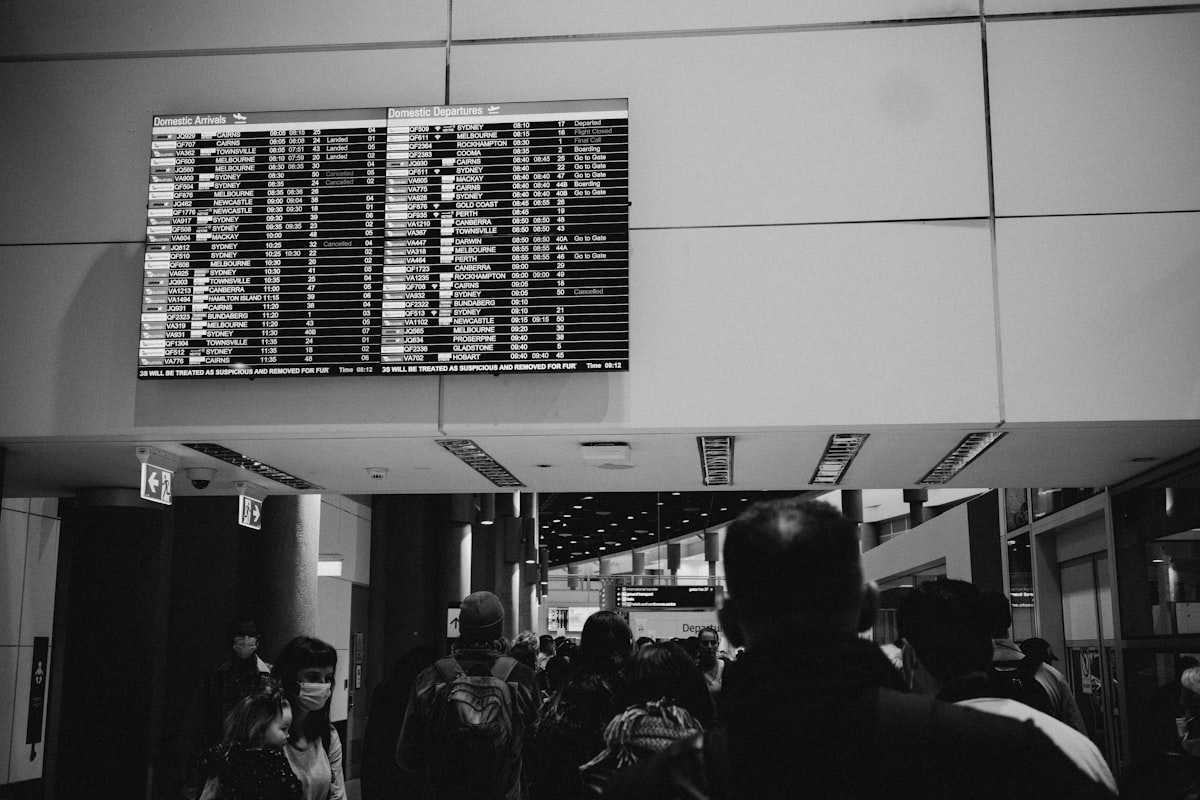
The Nomad Advantage
Before diving into tactics, understand why nomads have the best position in the flight market:
Date Flexibility
Airlines price flights dynamically. Tuesday departures are cheaper than Fridays. Mid-January is cheaper than late December. A nomad who can shift by 2-3 days in either direction saves 20-40% on almost every booking.
Destination Flexibility
"I need to fly from London to Bangkok on March 15th" is expensive. "I need to get from Europe to Southeast Asia sometime in March" is cheap. The wider your parameters, the lower your costs.
One-Way Tickets
Round trips are priced for tourists. Nomads book one-way tickets, which opens up different airlines, different routing, and different pricing for each leg. A one-way from Mexico City to Lisbon on a Tuesday in shoulder season might be half the price of a round trip's per-leg equivalent.
Positioning Flights
Sometimes the cheapest flight to Bangkok isn't from your current city — it's from a nearby city. A €20 budget airline hop from your location to a major hub, followed by a deal fare to your destination, can save hundreds.
The Core Booking Strategies
1. Search Engines, Not Airlines
Never start on an airline's website. Start with aggregators that search across all airlines simultaneously.
The essential tools:
- Google Flights — Best for date flexibility (use the calendar view and "flexible dates" feature), route exploration, and price tracking. The "explore" feature shows cheapest destinations from your airport
- Skyscanner — Best for the "everywhere" search. Enter your departure city, set destination to "everywhere," pick your month, and see the cheapest options globally. This is the nomad power tool
- Kiwi.com — Best for creative routing. Kiwi combines airlines that don't normally sell tickets together, creating itineraries with connections you wouldn't find elsewhere. Great for multi-city trips
- Momondo — Good for finding fares that Google Flights sometimes misses, especially on smaller airlines
The workflow:
- Check Google Flights for dates and rough pricing
- Search Skyscanner for the same route — sometimes finds cheaper options
- If the route is complex, try Kiwi for creative connections
- Book directly with the airline if the price matches the aggregator (better customer service and change policies)
2. The Tuesday-Wednesday Sweet Spot
Flight prices follow predictable weekly patterns. Tuesday and Wednesday departures are consistently the cheapest days across almost all routes. Sunday evenings and Friday afternoons are the most expensive.
For a nomad, this is free money. Instead of flying on Friday like everyone else, fly Tuesday. Save 15-30% on the same route.
3. Book at the Right Time
The "how far in advance" question depends on the route:
- Domestic / short-haul: 2-4 weeks before. Prices are stable and drop opportunities exist
- International / long-haul: 6-12 weeks before for the best prices. Booking 1-2 weeks out is expensive; booking 6+ months out is also often expensive
- Peak season: 3-4 months ahead for holiday periods (December, August, Chinese New Year)
- Error fares and deals: Whenever they appear — no timing rules apply
Set up price alerts on Google Flights for routes you're considering. The app notifies you when prices drop. This passive monitoring catches deals you'd otherwise miss.
4. Nearby Airport Arbitrage
Major cities often have multiple airports, and price differences between them can be dramatic.
Examples:
- London: Heathrow, Gatwick, Stansted, Luton, City. Budget carriers operate from Stansted and Luton at fraction prices
- New York: JFK, Newark, LaGuardia. Newark often has the cheapest international fares
- Bangkok: Suvarnabhumi (full-service) vs. Don Mueang (budget carriers)
- Tokyo: Narita (most international) vs. Haneda (closer to city, sometimes cheaper)
- Milan: Malpensa vs. Bergamo (Ryanair hub, much cheaper)
Google Flights lets you search by city rather than airport, showing all options. Always compare.
5. Hidden City Ticketing
A flight from A to B costs $600. A flight from A to C with a connection in B costs $350. You book the cheaper flight and get off at B.
The rules:
- Only works with one-way tickets (if you skip a leg on a round trip, the airline cancels the return)
- Never check bags — they'll go to the final destination
- Don't do this with airlines you have loyalty status with — they may penalize your account
- Use sparingly — it technically violates airline terms of service
Skiplagged.com finds these fares automatically.

Deal Sources
Error Fares
Airlines make pricing mistakes. A decimal in the wrong place, a currency conversion error, a routing miscalculation — and suddenly business class from New York to Tokyo costs $300. These are error fares, and they're the holy grail of travel hacking.
Where to find them:
- Secret Flying — The best error fare aggregator. Check daily or subscribe to alerts
- The Points Guy — Covers major error fares and deal alerts
- Jack's Flight Club — Free and paid tiers. Email alerts for mistake fares and deals from your region
- Google Flights alerts — Set alerts for routes you fly regularly. Occasional error fares trigger the notification
The catch: Error fares require immediate action. They last hours, sometimes minutes. When you see one, book first and plan later. Most are honoured by airlines (they're legally required to in many jurisdictions), but some get cancelled.
Budget Airlines by Region
Know your budget carriers for each region you travel in:
Europe:
- Ryanair, Wizz Air, easyJet — Intra-Europe from €10-€50
- Book carry-on only. Checked bags cost more than the flight
Latin America:
- VivaAerobus, Volaris (Mexico) — Domestic flights from $20-$60
- JetSMART (Chile, Argentina, Colombia) — Cross-country from $30-$80
- Sky Airline (Chile, Peru) — Similar pricing
- Flybondi (Argentina) — Buenos Aires connections from $20
Southeast Asia:
- AirAsia — The king. Connects the entire region for $20-$80
- Scoot, VietJet, Lion Air — All compete on price
- Singapore to Bali for $40 happens regularly
Middle East / Africa:
- FlyDubai, Air Arabia — Dubai connections from $50-$150
- FlySafair (South Africa) — Domestic from $25
Use Sour Mango's AI Trip Planner to map out multi-city itineraries. It factors in budget airline routes and suggests efficient routing between your planned destinations.
Points and Miles: The Nomad Strategy
The traditional points-and-miles game is designed for business travellers who fly the same routes repeatedly. Nomads need a different approach.
The Credit Card Strategy
If you're based in the US (or have US credit), travel credit cards are the most reliable way to accumulate points:
Best cards for nomads:
- Chase Sapphire Preferred/Reserve — Flexible points transferable to many airlines. No foreign transaction fees. The Reserve's lounge access (Priority Pass) pays for itself
- Capital One Venture X — Flat 2x miles on everything. Simple. $300 travel credit offsets the annual fee. Priority Pass included
- Amex Platinum — Premium lounge access (Centurion, Priority Pass), hotel status. High annual fee, worth it for heavy travellers
The strategy:
- Put all expenses on a travel credit card (2-5x points per dollar)
- Transfer points to airline partners when you find a good redemption
- Use points for long-haul flights where cash prices are highest
- Pay cash for budget airline short-haul flights (points are wasted on $30 fares)
Non-US Nomads
Points programmes are less lucrative outside the US, but not useless:
- Amex cards are available in the UK, Australia, Canada, and several EU countries
- Airline loyalty programmes still reward consistent flying — pick one alliance (Star Alliance, OneWorld, or SkyTeam) and stick with it
- Hotel loyalty points (Marriott, Hilton) transfer to airline miles at poor ratios but can work for specific redemptions
Lounge Access
Airport lounges transform layovers from miserable to productive. For nomads who fly monthly, lounge access is a legitimate work tool — WiFi, food, showers, quiet workspace.
Options:
- Priority Pass — Included with Chase Sapphire Reserve, Capital One Venture X, and Amex Platinum. 1,300+ lounges worldwide
- LoungeBuddy — Buy day passes for specific lounges ($25-$50)
- Airline status — Earned through flying. Star Alliance Gold gets you into any Star Alliance lounge worldwide
The Positioning Flight Strategy
This is the advanced nomad move that saves the most money over time.
The concept: Instead of booking an expensive direct flight from your current city, take a cheap budget flight to a hub city where deals originate, then book the long-haul flight from there.
Example:
- You're in Medellín and need to get to Bangkok
- Medellín to Bangkok direct routing: $900-$1,200
- Medellín to Mexico City on VivaAerobus: $80
- Mexico City to Tokyo (error fare you spotted): $350
- Tokyo to Bangkok on AirAsia: $60
- Total: $490 with two stops vs $900+ direct
This requires flexibility and planning, but Sour Mango's AI Trip Planner can help map multi-leg routes that exploit pricing differences between departure cities.
Practical Booking Tips
Use Incognito Mode
This is partially myth, partially real. Some booking sites do use cookies to track searches and subtly increase prices on routes you've searched multiple times. It probably saves you $5-$20 at most, but incognito mode costs nothing.
VPN for Regional Pricing
Airlines sometimes show different prices based on your location. Searching from India often shows lower prices for flights departing India. A VPN set to the departure country can occasionally reveal lower fares. Not guaranteed, but worth a 30-second check.
Book Directly When Possible
If the price on the airline's website matches the aggregator (within $10), book direct. You get better customer service, easier changes/cancellations, and your loyalty points credited automatically. Third-party booking sites are nightmares when things go wrong.
Carry-On Only
Budget airlines make their money on baggage fees. A carry-on-only lifestyle (see our packing guide) saves $25-$80 per flight on budget carriers. Over 10-15 flights a year, that's $250-$1,200 in savings. Check Packing Lists in Sour Mango for carry-on optimization.
Flight Insurance vs. Credit Card Coverage
Many travel credit cards include trip delay insurance, lost baggage coverage, and cancellation protection. Check your card benefits before buying separate flight insurance — you may already be covered.
The Annual Nomad Flight Budget
A realistic flight budget for a nomad making 8-12 flights per year:
Budget Approach (~$2,000-$3,500/year)
- Book 6-8 weeks ahead on flexible dates
- Use budget airlines for regional flights
- Take positioning flights to exploit deals
- Fly mid-week consistently
- Carry-on only
Moderate Approach (~$3,500-$5,500/year)
- Mix of deal fares and convenience bookings
- Occasional checked bag when needed
- Some weekend departures
- One or two premium-economy long-hauls
Comfort Approach (~$5,500-$8,000/year)
- Book for convenience over price
- Checked bags when needed
- Use points for business class upgrades on long-haul
- Lounge access at every airport
Most nomads land in the budget-to-moderate range and save the difference for experiences at their destination — which is usually the smarter investment.
The Bottom Line
Travel hacking for nomads isn't about extreme couponing or spending 10 hours finding the perfect fare. It's about building habits that consistently save 20-40% on every flight: searching with the right tools, flying on cheap days, staying flexible on dates and destinations, and knowing when a deal is genuinely good.
Set up Google Flights alerts for your likely routes. Follow Secret Flying for error fares. Use budget airlines for short hops. Put expenses on a travel credit card. Fly on Tuesdays. Pack carry-on only.
Do these things consistently and you'll save $1,500-$3,000 per year on flights alone. That's two months of rent in Medellín, or six months of street food in Penang, or one very good bottle of wine in every country you visit this year.
Plan multi-city itineraries with the AI Trip Planner, track visa requirements at every destination, convert currencies on the fly, and connect with nomads who know the local flight deals — all in Sour Mango. Download it and fly smarter.
Travel smarter with Sour Mango
Visa tracking, AI trip planner, WiFi speed tests, and a global nomad community — all in one free app.
Explore more guides
Browse all city guides →